Training Hub Corrective Add-Ons Lower Body Upper Body

Corrective Protocol v2

Evidence-based rebuild from 776KB research. Tap exercise to expand.
Sequence matters: Release → Mobilize → Lengthen → Activate → Integrate. Each phase creates conditions for the next. Don't randomize.
Only have a couple minutes? The full protocol is 32 min, but you can do corrective micro-doses throughout the day. See Micro-Dose Guide for time-of-day movement snacks (morning, mid-day, evening) that hit the same corrective targets in 2-5 min blocks. Also: Desk Stretches for seated lower body mobility at your desk.
?
Before You Start — Common Questions
Tap to expand
Do I need to warm up before this?
No. Phase 1 foam rolling IS your warm-up. If coming straight from sitting or cold temps, 2-3 minutes of light walking first raises tissue temperature and makes rolling more effective. That's it.
Should I do dynamic stretching too?
Not inside the protocol. Dynamic stretching (leg swings, hip circles, inchworms) is excellent as a pre-WORKOUT warm-up — add it AFTER this routine, BEFORE your training session. Don't mix it in here — dynamic movement doesn't create the structural change this protocol targets (sustained load, 4+ min static/PNF).
What about PNF — how does it work?
PNF (Proprioceptive Neuromuscular Facilitation) appears in several exercises. The formula is always the same: stretch to end range → contract at 50-70% effort for 6-8 seconds → fully relax → sink deeper into the stretch. 3 cycles. 50-70% is optimal — maximal contractions backfire by triggering protective guarding. Works for calves, hip flexors, wrists, glutes — any muscle. 2-4x/week max.
Can I do stretches seated or on my back?
For ankles/calves: supine with band around ball of foot works (knee bent = soleus, straight = gastroc). For hip flexors: supine single-knee-to-chest (opposite leg heavy on floor = the stretch). Seated options are generally inferior for hip flexors since sitting keeps the hip in flexion. Seated figure-4 works fine for glutes.
How long does this take?
~32 minutes for the full 13-exercise daily routine. On training days, add 5-8 minutes from the training day page BEFORE your workout.

Phase 1: Release ~3 min

1
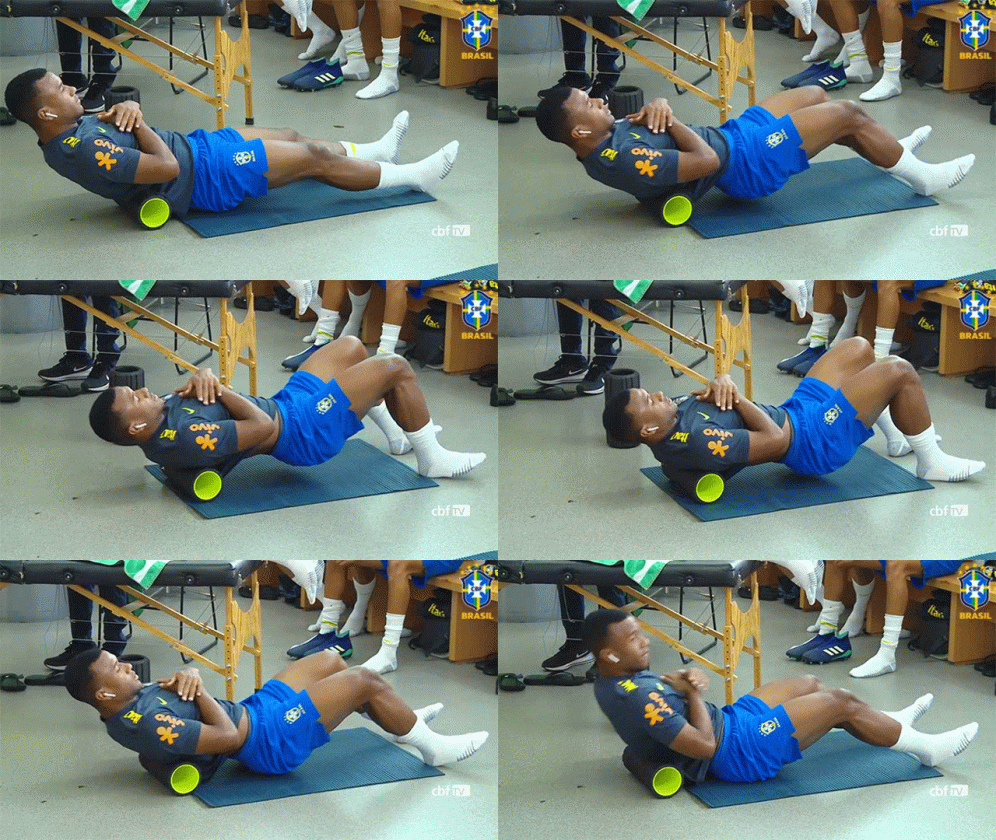
Foam Roll Thoracic Spine NEW
60 seconds
Reduces erector neural tone before mobilization. Creates 10-20 min window of improved extensibility for roller extensions that follow.
  1. Lie on foam roller perpendicular to spine at mid-back (bottom of shoulder blades).
  2. Cross arms on chest. Feet flat, knees bent.
  3. Lightly brace abs — like expecting a tap on the stomach. Prevents lower back arching.
  4. Slowly roll UP from mid-back toward base of neck. ~10 seconds travel.
  5. PAUSE 5-10 seconds on stiff/tender spots. Breathe into the pressure.
  6. Roll back down. Repeat for 60 seconds total.
Key cue: SLOW rolling with PAUSES on stiff spots. Not fast back-and-forth massage.
Should feel: Pressure on stiff mid-back spots. Some spots feel like rigid areas — those are your locked segments.
Wrong if: Lower back pain (roller too low — stay above shoulder blades). Neck strain (keep head neutral).
Common mistake: Rolling fast like a massage. This is SLOW with deliberate PAUSES. Also: rolling the lower back. Stay above the bottom of shoulder blades — the lumbar spine should NEVER be foam rolled (no rib cage to protect the spine there).
Success feels like: After a few days, you start to notice specific stiff "ridges" as you roll. Over weeks, those ridges soften and the roller feels less like it's hitting a brick wall.
Watch Demo (Rolling vs Extensions)
Foam rolling thoracic spine demonstration
2
Foam Roll / Lacrosse Ball TFL NEW
60s / side
Quiets TFL (front-outside hip) before hip IR work. TFL was overworking because glutes aren't firing. Was 0% coverage in v1 — single biggest gap.
  1. Lie face down. Place foam roller/lacrosse ball under front-outside of hip — ~2 inches below and forward of the bony hip point. Small muscle, size of your thumb.
  2. NOT the IT band (that's further down the leg). TFL is HIGH and FORWARD on the hip.
  3. Support on forearms. Opposite leg out to side for balance.
  4. Apply moderate pressure — it will be TENDER when you find it.
  5. Rock side to side slowly. When you find the most tender point, HOLD 10-15 seconds.
  6. After hold: 3-4 slow knee bend/straighten motions while maintaining pressure ("pin and stretch").
  7. 60 seconds per side.
Key cue: Tender spot the size of a golf ball, high on front-outside of hip. If on side of thigh, you're too low (IT band).
Should feel: "Hurts-so-good" tenderness directly on TFL. Relief after releasing.
Wrong if: Pain down outside of leg (IT band — move up). Hip joint pain (too deep/far back). No tenderness (reposition).
Common mistake: Rolling the IT band (side of thigh) and calling it TFL. The TFL is much HIGHER — right at the hip bone, front-outside. Also: going too aggressive. Moderate pressure with pauses is more effective than grinding.
Success feels like: After release, the 90/90 IR lift-offs (Card 10) feel cleaner — less pinching in the front of the hip. Over weeks, the TFL becomes less tender as it stops overworking.
Watch Demo

Phase 2: Breathe + Mobilize ~5 min

3
Crocodile Breathing NEW
6-8 breaths (~1.5 min)
3-in-1: (1) reduces thoracic erector tone (Korean study measured this), (2) trains diaphragmatic breathing with posterior rib expansion, (3) mobilizes psoas-diaphragm connection. Replaces cat-cow — more effective for your specific issue.
  1. Lie FACE DOWN (prone). Forehead on stacked hands. Legs relaxed.
  2. Breathe in through nose. Direct breath INTO YOUR BELLY — feel belly press into floor.
  3. Continue inhaling: expand SIDEWAYS into lower ribs and BACKWARD into lower back. Imagine inflating a balloon that pushes front (floor), sides (elbows), back (ceiling).
  4. Your BACK should visibly rise. Not shoulders, not neck — lower ribs and lower back.
  5. Exhale slowly through mouth (8 seconds). Let everything deflate.
  6. 6-8 breaths. Each ~10-12 seconds total.
Key cue: "Breathe into the floor, expand into the back." Chest and shoulders should NOT rise. Floor gives tactile feedback.
Should feel: Belly pressing into floor on inhale. Lower ribs expanding sideways. Lower back rising. Relaxation.
Wrong if: Shoulders rising (redirect to belly). No belly-to-floor pressure (breath going to chest). Dizzy (slow down).
Common mistake: Trying to take huge breaths. These should be NORMAL-sized breaths directed to a different place (belly/back instead of chest). Also: rushing. Each breath cycle should be 10-12 seconds. If you're doing 6 breaths in 30 seconds, you're going too fast.
Success feels like: A sense of your mid-back "dropping" or relaxing into the floor. Your lower back may feel less tense afterward. Over weeks, you'll feel your ribs expanding sideways without thinking about it — even during standing activities.
Watch Demo (Face Down - Correct) Alt: Supine Version (B3 PT)
4
Thoracic Roller Extensions
3 min (5-6 positions)
Segmental mobilization — root cause #1. "Pressing into a hard tube" during assessment. This works individual vertebrae. Different from Card 1 — that was ROLLING (release), this is EXTENDING (mobilize).
  1. Sit on floor. Roller perpendicular to spine at BOTTOM of shoulder blades.
  2. Cross arms on chest. Feet flat, knees bent.
  3. LIGHTLY BRACE ABS — like expecting a light tap. Prevents lumbar from arching and stealing the extension. THIS IS CRITICAL.
  4. Butt stays on floor. Do NOT bridge up.
  5. Slowly extend upper back OVER the roller. Head drops toward floor. "Drape over" not "push through."
  6. BREATHE OUT as you extend. Exhale drives ribs down, allows more thoracic extension. Inhale on return.
  7. 3-5 small extension reps at each position.
  8. MOVE ROLLER UP one vertebra (~1 inch). Repeat. 5-6 positions from shoulder blades to base of neck.
Key cue: "Abs braced, butt down, breathe out as you extend." Small focused movements at roller contact point.
Should feel: Stiffness/resistance at roller contact point. Maybe cracking/popping (normal — gas from facet joints). Over time, less "hard tube," more bending.
Wrong if: Lower back pain/arching (roller too low OR lost ab brace). Neck strain (let head hang, don't hold it). Rolling up and down (PARK the roller, EXTEND over it).
Common mistake: Bridging hips up and extending from the lumbar spine. Your butt stays DOWN. Also: treating this like foam rolling — rolling up and down is Card 1, this is PARK and EXTEND. And forgetting the ab brace — without it, your lower back does the work and your thoracic stays locked.
Success feels like: Eventually you'll feel a "give" or small pop/crack as a segment moves. Over days/weeks, the roller feels less like a hard tube and more like something your back bends around.
Breathwork tip: BREATHE OUT as you extend over the roller. Exhale drives rib depression, which prevents your lumbar spine from compensating. Inhale on the way back up. This breathing pattern is what separates effective thoracic mobilization from just lying on a roller.
Watch Demo (B3 PT) Alt: Segmental Focus

Phase 3: Lengthen ~12 min

5
Couch Stretch + PNF
4 min / side
Root cause #2 — hip flexors are STRUCTURALLY short (can't flatten back to wall even trying). Increased from 3 to 4 min — previous dose was below stiffness reduction threshold.
  1. Kneel facing AWAY from wall. Place one knee on the ground right at the base of the wall.
  2. Slide your shin UP the wall behind you — top of foot against wall, shin roughly vertical.
  3. Step the other foot forward into a lunge. Front shin roughly vertical, front knee over ankle. Front foot should be far enough forward that you feel the stretch in the BACK leg, not the front.
  1. SQUEEZE THE GLUTE of the BACK LEG. Hard. Like cracking a walnut between your cheeks. This tilts your pelvis backward and prevents your lower back from arching. Without this, you're just compressing your lumbar spine. Keep this squeeze the ENTIRE time — not 100% max effort, more like 40-50% sustained. Think "firm and constant" not "death grip."
  2. TUCK YOUR TAILBONE. Imagine your belt buckle — try to tilt it upward toward your chin. Or: imagine someone attached a string to your tailbone and is pulling it down and forward between your legs. Your lower abs will engage to help — that's correct, let them work. You'll feel your pelvis rotate slightly — the bottom of your pelvis tips forward, the top tips back. This is a "posterior pelvic tilt." You should feel your lower back FLATTEN rather than arch.
  3. NOW go upright. While maintaining the glute squeeze and tailbone tuck, slowly bring your torso more upright. You will NOT get fully upright — that's fine and expected. Go as far as you can while KEEPING cues 1 and 2. The moment your lower back starts arching, you've gone too far — back off slightly.
  1. First 30-60s: Get into position, find your stretch, establish glute squeeze + tailbone tuck. Breathe. Settle in.
  2. PNF Cycle 1 (~60s): At your end range, push your back knee DOWN into the floor (like trying to straighten the leg) for 6-10 seconds at 50-70% effort — NOT maximal. Research shows hard-but-not-maximal is optimal. Then FULLY RELAX for 5 seconds. Exhale completely. Now re-squeeze the glute, re-tuck the tailbone, and sink slightly deeper into the stretch. You should gain a few millimeters.
  3. PNF Cycle 2 (~60s): Same thing. Contract 6-10s → relax → re-cue → sink deeper.
  4. PNF Cycle 3 (~60s): Same thing. You may notice each cycle gets slightly deeper.
  5. Remaining time (~60s): Hold at your deepest comfortable range. Breathe. Maintain the glute squeeze at a LOW level (30-40% effort — just enough to keep the pelvis tilted, not exhausting).
  6. Switch sides. Repeat all of the above on the other leg.
  1. Same setup. Same 3 cues. But instead of PNF contractions, just HOLD at end range for 4 minutes per side.
  2. Maintain glute squeeze at ~30-40% (enough to keep pelvis tilted, not exhausting).
  3. Breathe deeply. On each exhale, see if you can sink a millimeter deeper without forcing.
Key cue: "Glute squeeze, tailbone tuck, THEN go upright." Three cues in that order, every time. If you lose any cue, RESET before continuing.
Front of the thigh (rectus femoris): The big muscle on the front of the back leg, from knee toward hip. This is the most obvious stretch sensation.

Deep in the "hip crease" (iliopsoas): This is harder to describe. The "hip crease" is the fold where your thigh meets your torso — if you put your fingers right in that fold at the front of your hip and pressed deep, that's where the iliopsoas lives. The stretch here feels DEEP and slightly internal, like something is being pulled from inside the front of your hip socket. It's different from the surface-level quad stretch. If you only feel the quad stretch and not this deeper sensation, try tucking the tailbone more aggressively.

Back-leg glute: Should feel like it's working (sustaining a contraction), not stretched.
Wrong if: Lower back pain or arching (you lost the glute squeeze or tailbone tuck — RESET, don't push through). Knee pain on back leg (pad the knee with a towel; if still painful, try half-kneeling variant away from wall instead). Only feeling front leg (front foot too close — step it further forward). Only feeling quad, not deep hip crease (tuck tailbone more aggressively).
Common mistake: Leaning the torso BACK instead of bringing it UPRIGHT. Leaning back arches the lumbar spine. Think "tall spine" not "lean back" — chest goes UP, not back. Also: forgetting the glute squeeze — without it you're just arching your lower back. Also: contracting at MAX effort during PNF — 50-70% is optimal, maximal contractions trigger excessive protective guarding.
Success feels like: Over days, you'll be able to get more upright while maintaining the glute squeeze and tailbone tuck. The stretch deepens from surface-level quad into the deeper hip crease (iliopsoas). PNF cycles produce noticeable gains within the session. After 2-4 weeks, the wall test gap starts closing.
Watch Demo (with PNF) Alt: Detailed Hip Flexor Relief
Tip: You can do the soleus stretch (#7) BEFORE the wall drill (#6) if it helps your ankle feel looser for the drill. Both are Phase 3 — order between them is flexible.
6
Ankle Wall Drill + PNF
1 min / side
Gastrocnemius dorsiflexion + pronation motor control. Currently ~2 inches (bottom 10-15%). Target: 4+ inches.
  1. Face wall. Place one foot ~2 inches from wall (your current max), toes straight ahead.
  2. Keeping HEEL FLAT, drive knee forward toward wall.
  3. Knee must track over 2nd-3rd toe. Do NOT let knee drift inward (pronation). This is motor retraining, not just stretching.
  4. "Spread the floor" with your foot — push big toe and little toe apart. Activates foot intrinsics and prevents arch collapse.
  5. Set 1 (reps): Do 5-8 slow controlled reps. Drive knee to wall, return to start. Focus on quality — heel flat, knee tracking, "spread the floor" each rep. ~20 seconds.
  6. Set 2 (PNF, 3-4 days/week): Drive knee to wall at your max. HOLD there. Push ball of foot down into floor (like doing a calf raise against the wall) for 6 seconds. Relax completely. Drive knee forward into new range. Repeat 3 cycles. ~30 seconds.
  7. If you can touch knee to wall easily, slide foot back half an inch and retry. Track the distance as your progress metric.
  8. Switch sides. Same thing.
Key cue: "Heel down, knee over 2nd toe, spread the floor."
Should feel: Calf stretch (back of lower leg). Mild effort in foot arch from "spread the floor."
Wrong if: Heel lifting (move closer). Knee diving inward (reset — track over 2nd toe). Front-of-ankle pinching (add banded distraction before this).
Common mistake: Letting the knee collapse inward to cheat more range. This trains pronation — the exact pattern we're trying to fix. Also: lifting the heel subtly. If your heel is even slightly off the ground, the measurement is invalid.
Success feels like: Each week, you can move the foot slightly further from the wall while still touching knee to wall with heel flat. Track distance in inches — the number should slowly climb from ~2 toward 4+.
Can't stand? Supine alternative: leg up, loop band/towel around ball of foot, pull toward shin with knee STRAIGHT (gastroc). PNF: push foot into band 50-70% for 6s, relax, pull deeper. 3 cycles. Same tracking principle applies.
Watch Demo
Ankle wall drill demonstration
7
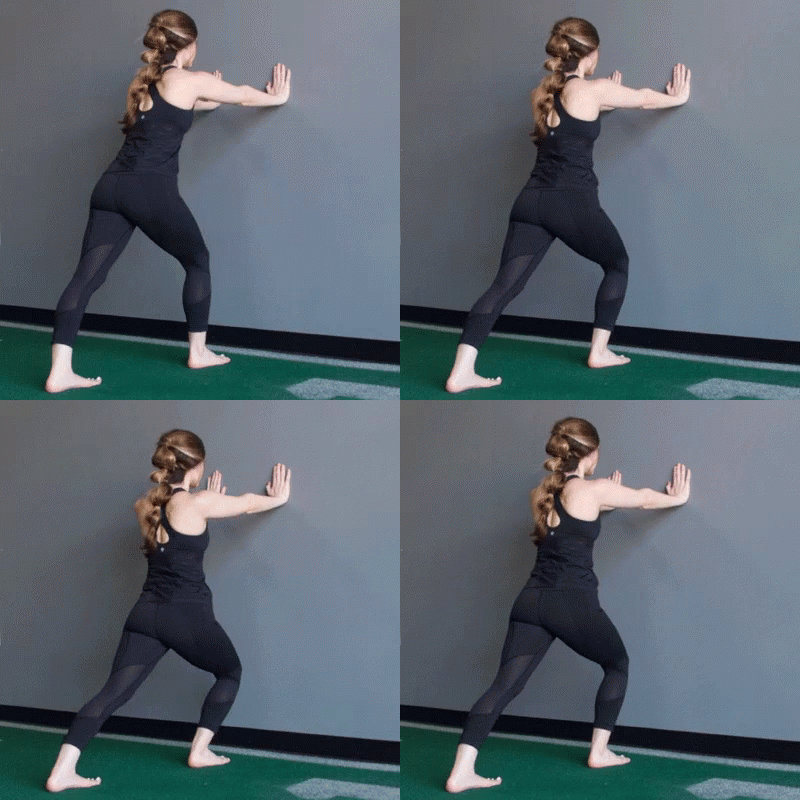
Bent-Knee Soleus Stretch + PNF
1 min / side
Targets SOLEUS — your PRIMARY ankle limiter. Wall drill targets gastrocnemius (2-joint). Soleus is single-joint, only stretches with knee BENT. If you only stretch straight-knee, you'll never reach the soleus.
  1. Stand facing wall. Step one foot forward (~6 inches from wall).
  2. BEND THE KNEE significantly — this isolates soleus. "Knees over toes" position.
  3. Keep heel FLAT on ground. Lean body weight forward, driving bent knee toward wall.
  4. Stretch should be LOWER in the calf than straight-knee version — closer to Achilles area.
  5. PNF: At end range, press ball of front foot down (like seated calf raise) for 6s. Relax, lean deeper.
  6. 1 min/side daily. Deeper work (2+ min/side) on mobility day.
Key cue: "Bend the knee, flatten the heel, feel it LOW in the calf."
Should feel: Deep stretch in lower calf, near Achilles region. Different from straight-knee — deeper and lower.
Wrong if: Upper calf only (knee not bent enough). Heel lifting (reduce lean). Sharp Achilles pain (ease off — tenderness OK, sharp is not). Right ankle stiffer (expected — old injury).
Common mistake: Not bending the knee enough — if your knee is mostly straight, you're stretching gastrocnemius (Card 6 already does that), not soleus. Really exaggerate the knee bend. Also: confusing this with the wall drill. Wall drill = knee to wall, straight leg. This = knee VERY bent, lean forward.
Success feels like: The stretch point moves deeper and lower over time. Initially feels like a general calf stretch; after weeks, you feel a very specific deep pull near the Achilles-to-muscle junction. Right ankle will lag left — be patient with it.
Track progress: Use the ankle wall test (Card 6) as your measurement. Track distance from wall weekly — your number should climb from ~2 inches toward 4+. The soleus is the PRIMARY limiter of this test, so gains here directly show up there.
Can't stand? Supine: leg up, band around ball of foot, pull toward shin with knee BENT ~20-30° (isolates soleus). Seated: same position on thigh edge, band pull. PNF: push foot into band 50-70% for 6s, relax, pull deeper. 3 cycles.
Watch Demo

Phase 4: Activate ~8 min

8
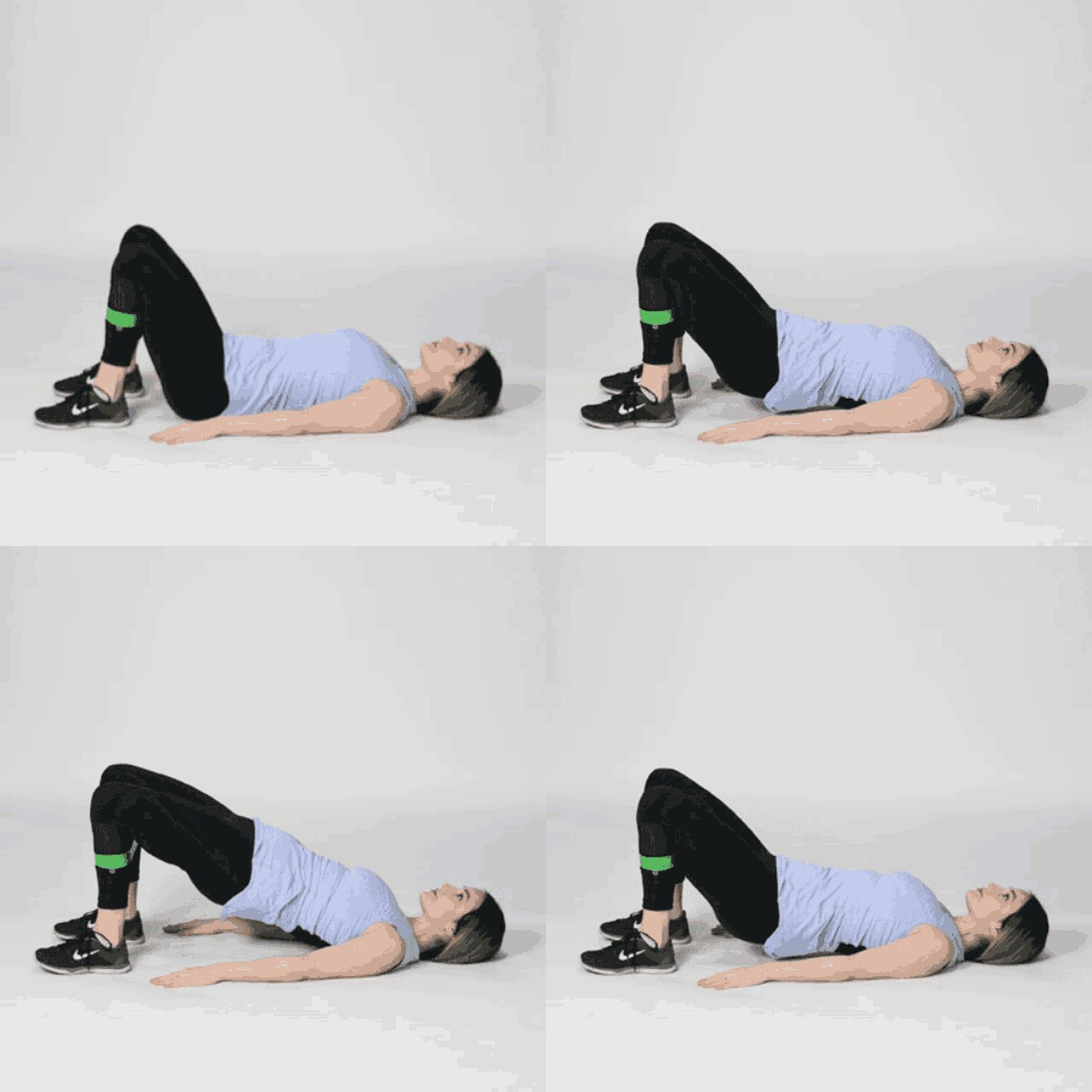
Banded Glute Bridge + 5s Hold
2 x 8 reps, 5s hold
Glute max motor control — root cause #3. Not weakness (you squat heavy). Motor control from 20 years compound-only. Band forces medius. Hold forces sustained activation.
  1. Band above knees. Lie on back. Knees bent, feet flat, hip-width.
  2. Push knees OUT against band — activates glute medius. Maintain throughout.
  3. Squeeze glutes FIRST — before lifting. "Crack a walnut."
  4. Drive through HEELS. Lift hips to straight line knees-to-shoulders. Do NOT hyperextend/arch.
  5. HOLD 5 seconds. Actively check: Am I feeling GLUTES? If migrating to hamstrings/back, lower slightly and re-squeeze.
  6. Lower slowly (3 seconds). Don't bounce. 2 sets x 8 reps.
Key cue: "Knees out, squeeze first, hold 5 seconds, feel it in glutes the ENTIRE time."
Active check (every rep): At the top of each 5s hold, ask: "Am I feeling GLUTES?" If the burn has migrated to hamstrings or lower back, LOWER slightly and re-squeeze before continuing. The migration pattern (glute → hamstring → back) is the exact dysfunction this exercise fixes.
Should feel: Burn in glute muscles. The 5s hold makes it harder to keep sensation in glutes — that's the point.
Wrong if: Hamstring cramping (feet too far — bring closer). Lower back tightening (don't go as high, focus on squeeze not height). Quads only (pushing through toes — drive through heels).
Common mistake: Going for HEIGHT instead of SQUEEZE. The goal is not how high your hips go — it's how strongly and how long your glutes sustain the contraction. A lower bridge with pure glute activation beats a high bridge with hamstring/back takeover.
Success feels like: The 5-second hold gets easier to maintain "in the glutes." The migration pattern (glute → hamstring → back) slows down. Eventually, the burn stays in the glutes for the full 5 seconds without drifting. Bridge test on retest shows sustained glute activation.
Watch Demo
Glute bridge demonstration
9
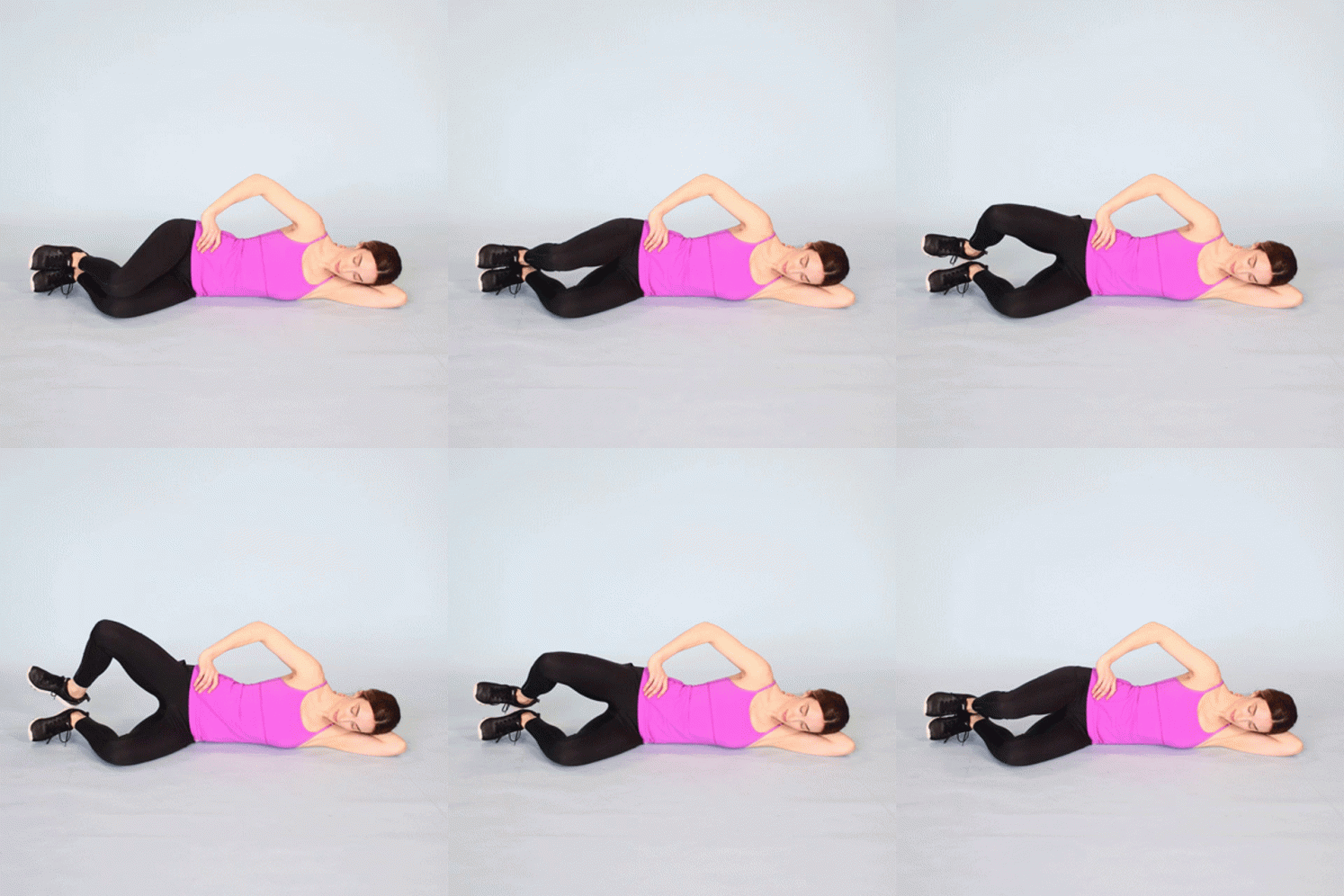
Side-Lying Clam with Band NEW
2 x 12/side, 2s hold (~2.5 min)
Glute MEDIUS isolation. Research: 115:1 glute-to-TFL activation ratio — highest of ANY exercise tested (Selkowitz 2013, fine-wire EMG). Your TFL overworks because glute med is inhibited. This directly retrains that.
  1. Band just above knees. Lie on side. Hips stacked. Knees bent ~90 degrees. Feet touching.
  2. Keep feet touching throughout — if feet separate, hip flexors take over.
  3. Without rolling pelvis backward, rotate top knee UPWARD like a clamshell. Rotation from HIP, not spine.
  4. Open to ~45 degrees (or until pelvis wants to roll — stop before that).
  5. Hold 2 seconds at top. Feel it in SIDE of hip/butt (glute medius), NOT front.
  6. Lower slowly. 12 reps/side, 2 sets.
Key cue: "Feet glued together, rotate from hip, feel it in side of butt."
Should feel: Burn in side of hip/butt — where your back jeans pocket sits. That's glute medius.
Wrong if: Front of hip (TFL — reduce range, go slower). Pelvis rolling (place back against wall). No burn (heavier band).
Common mistake: Letting the pelvis roll backward to cheat more range. The hip socket should rotate, not the whole pelvis. Place your back against a wall to prevent this. Also: separating the feet — keep them GLUED together, that's what isolates the glute medius rotation.
Success feels like: You start to feel a clear, targeted burn in the side of your hip (glute medius) rather than vague hip fatigue. Over weeks, hip drop during single-leg stance decreases (test: stand on one leg in a mirror — does the opposite hip still drop?).
Watch Demo
Side-lying clam demonstration
10
90/90 IR Lift-Offs
10 reps x 5s / side (~3 min)
Deep hip rotator activation for hip IR. NOW effective because TFL was released in Phase 1 — deep rotators can fire without TFL interference. This ordering change is a key v2 improvement.
  1. Sit on floor in 90/90: front leg hip+knee both ~90 degrees (shin parallel to body), back leg hip+knee both ~90 degrees (shin behind you).
  2. Sit tall — don't lean or slump.
  3. Focus on BACK LEG (the one in internal rotation).
  4. Without moving pelvis, try to lift the KNEE of back leg off floor. Foot stays down.
  5. Lift will be TINY — 1-2 inches. That's fine. Activating deep rotators.
  6. Hold 5 seconds. Breathe normally.
  7. 10 reps. Switch sides.
Key cue: "Tiny lift, big hold. Feel the deep hip, not the front."
Should feel: Work deep in hip of back leg — behind and slightly below joint. Deep, unfamiliar sensation.
Wrong if: TFL pinching front-outside (re-roll TFL, retry). Lower back compensating (keep pelvis still). Too easy (press harder — should be effortful even with tiny motion).
Common mistake: Trying to lift the knee high. The lift should be TINY (1-2 inches max). The goal is deep rotator activation, not range of motion. Also: rotating your whole pelvis instead of just the femur — if your torso is twisting, you're cheating.
Success feels like: The "deep hip" sensation becomes more familiar and easier to find. The TFL pinching during the movement decreases (sign that deep rotators are taking over from TFL). Over weeks, the lift-off height may increase slightly as the deep rotators strengthen.
Watch Demo
11
Chin Tucks
3 x 10s
Deep neck flexors — headache prevention. Assessment: chin drift (SCM compensating), cervicogenic headaches confirmed. 30 seconds total, zero fatigue risk.
  1. Sitting, standing, or lying down (lying down is easiest to learn).
  2. Draw chin straight BACKWARD — double chin. NOT tilting head down or up. "Slide head backward on a shelf."
  3. Hold 10 seconds. Breathe normally.
  4. Release. Repeat 3 times.
Key cue: "Double chin, slide backward, don't nod." Motion is horizontal, not rotational.
Should feel: Gentle stretch base of skull. Mild activation front of neck (deep, not surface).
Wrong if: Pain (ease off). Jaw clenching (relax jaw). Surface neck only (SCM taking over — smaller, slower motion).
Common mistake: Nodding the head down (chin to chest). This is NOT a nod — it's a horizontal slide backward. Think "making a double chin" or "pulling your head back like a turtle." Also: pushing too hard. Gentle retraction is all that's needed.
Success feels like: Headache frequency decreases within 1-2 weeks. The retraction motion becomes natural — you start catching yourself in forward head posture and self-correcting. Base-of-skull tension decreases.
Watch Demo

Phase 5: Integrate ~4 min

12
Spider-Man Lunge + Thoracic Rotation NEW
5 / side (~2 min)
Hits 4 root causes in one movement: thoracic rotation, hip flexor lengthening, glute activation, ankle dorsiflexion. If you could only do ONE exercise, this is it.
  1. Start in push-up position (high plank).
  2. Step RIGHT foot forward to OUTSIDE of right hand. Foot flat, knee tracking over 2nd-3rd toe. Let hips sink down — squeeze your LEFT glute (back leg) to deepen the hip flexor stretch and protect your lower back.
  3. Drive right knee outward slightly (glute medius cue — same as clam and bridge).
  4. Left hand flat on floor for support. Lightly brace your core — this prevents your lower back from sagging.
  5. Rotate: reach RIGHT arm straight up toward ceiling. Follow hand with eyes. Exhale as you rotate — breathing out helps your ribs rotate further. Open chest to the right.
  6. Hold 3-5 seconds. Breathe into the rotation — exhale and try to rotate slightly further.
  7. Hand back down. Step back to plank. Other side. 5 each side.
Key cue: "Step outside the hand, sink hips, reach and rotate, follow hand with eyes."
Should feel: Hip flexor stretch (back leg), ankle work (front leg), thoracic rotation (reach up), glute engagement (front leg stabilizing). Stretch AND movement.
Wrong if: Front knee caving in (push out). Can't reach foot to hand (step as far as you can). Lower back rotating instead of thoracic (keep going — this is what you're training). No rotation (reach for ceiling, show chest to wall beside you).
Common mistake: Not stepping the foot far enough forward — it should land OUTSIDE your hand, not next to it. Also: rushing through the rotation. The 3-5 second hold at the top with exhale is where the thoracic gains happen. And: looking at the floor instead of following your hand up — eye tracking drives spinal rotation.
Success feels like: Rotation range increases noticeably week over week. You can see further "behind" you at the top. The hip flexor stretch on the back leg deepens as hip mobility improves. Eventually the movement feels fluid rather than stiff and segmented.
Watch Demo
13
Dead Bug (Posterior Pelvic Tilt)
2 x 8 (4 each side) (~2 min)
Deep core anti-extension + breathing coordination + pelvic control. Trains core to hold pelvis neutral while limbs move — exactly the skill deficit behind persistent APT.
  1. Lie on back. Knees bent 90 degrees, shins parallel to ceiling (tabletop). Arms straight up.
  2. FLATTEN lower back into floor. Tuck tailbone, engage deep core. NO gap between back and floor.
  3. Maintain flat back throughout every rep. This is the entire point.
  4. Slowly extend RIGHT arm overhead + LEFT leg forward simultaneously. Go as far as you can WHILE BACK STAYS FLAT. Moment it arches = too far.
  5. EXHALE as you extend. Not optional — drives ribs down, maintains flat back.
  6. Return to start. Opposite side. 8 reps (4 each side) x 2 sets.
Key cue: "Back stays flat, exhale as you extend, range is earned — never force past flat back."
Should feel: Deep core bracing in lower abdomen (NOT six-pack). Difficulty is maintaining flat back while limbs move.
Wrong if: Back arching off floor (reduce range). Holding breath (exhale on extension). Six-pack burning but lower abs quiet (draw belly button to spine before each rep). Neck straining (head on floor).
Common mistake: Extending the limbs too far and letting the back arch off the floor. Range of motion is EARNED — if your back lifts, you went too far. Better to do tiny controlled movements with a perfectly flat back than big impressive-looking ones with an arching spine. The flat back IS the exercise.
Success feels like: You can extend limbs further while keeping the back flat. The deep core engagement becomes automatic rather than requiring intense concentration. Over weeks, you'll notice better pelvic control during squats and everyday movements.
Watch Demo (with pelvic tilt)
Dead bug demonstration

Mobility Day Add-Ons +15 min

14
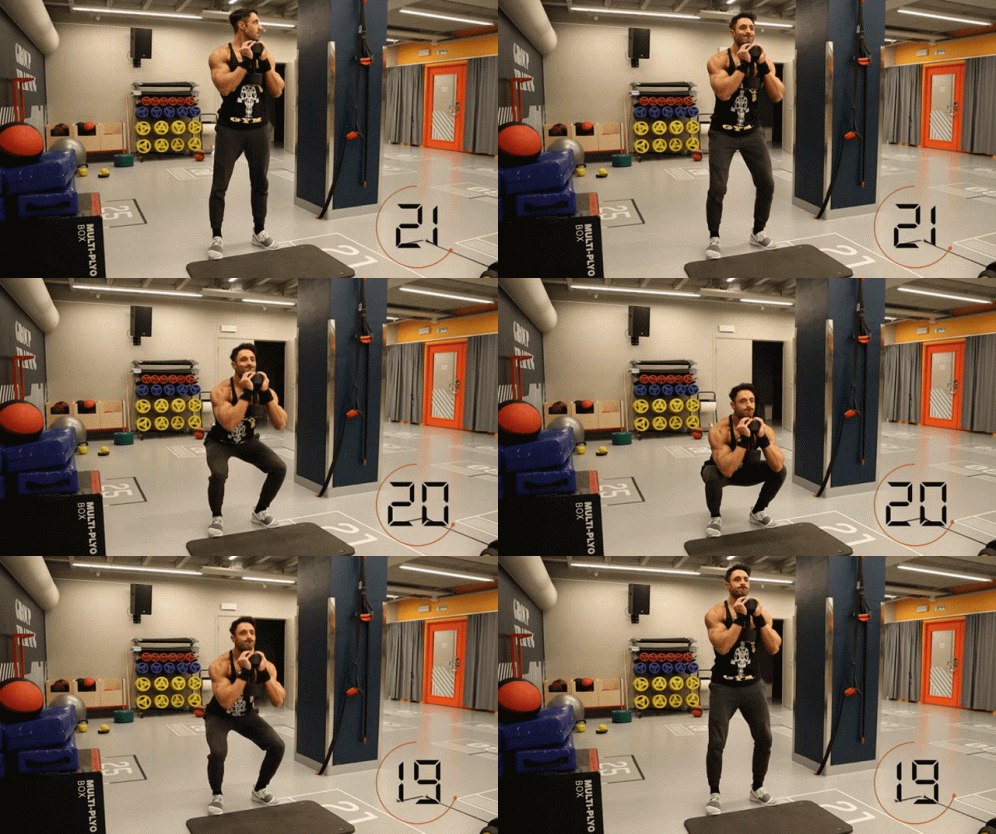
Prying Goblet Squat Hold NEW
3 x 30-60s
Hits 5 conditions: loaded dorsiflexion, upright torso (anti-APT), glute med (knee-out), foot intrinsics, breathing under load. Dan John's signature drill.
  1. Hold a dumbbell or kettlebell (20-35 lbs) at chest height, goblet position.
  2. Squat down as deep as you can with heels FLAT and torso UPRIGHT. The weight acts as a counterbalance.
  3. At the bottom, use your elbows to push your knees OUT. This is the "prying" — open your hips.
  4. Shift weight side to side gently. Rock forward/back slightly. Explore the bottom position.
  5. Breathe: Try 360-degree breathing (belly + sides + back) while holding the position.
  6. Hold 30-60 seconds. 3 sets. Rest between sets.
Key cue: "Elbows inside knees, push knees out, breathe into your belly, heels flat."
Should feel: Ankle stretch, hip opening, thoracic demand to stay upright, foot intrinsics working to maintain arch.
Wrong if: Heels lifting (use a small plate under heels temporarily). Rounding forward (hold weight closer to chest). Knee pain (don't force depth — go as deep as comfortable).
Common mistake: Rounding forward into a "tuck" instead of staying upright. The weight is a COUNTERBALANCE — it should help you stay upright, not pull you forward. Also: just sitting there passively. The "prying" is active — elbows pushing knees outward, shifting weight, exploring the bottom position.
Success feels like: The bottom position becomes more comfortable over time. Ankles feel less "blocked." You can breathe more easily in the deep squat. Eventually this becomes a resting position you can hang out in.
Watch Demo (StrongFirst)
Prying goblet squat demonstration
15
Eccentric Calf Raises (Bent-Knee) 3-4x/week
2 x 10/leg, 3-5s descent
The ONLY stimulus that adds sarcomeres to soleus (structural lengthening). 3-5s eccentric tempo triggers sarcomerogenesis. NOT daily — tendons need 48h recovery.
  1. Stand on a step or plate with ball of one foot on edge, heel hanging off.
  2. BEND THE KNEE slightly (soleus focus, not gastrocnemius).
  3. Rise up on the ball of foot (concentric — can use both legs to assist).
  4. SLOWLY lower the heel below the step over 3-5 seconds. This is the eccentric phase — where the magic happens.
  5. Go as deep as comfortable below the step level. You should feel a deep stretch-under-load.
  6. 10 reps per leg. 2 sets. Use wall for balance.
Key cue: "Bend the knee, slow descent (count to 5), go below step level."
Should feel: Deep stretch + work in lower calf/soleus during the descent. This is "stretching under load."
Wrong if: Straight knee (that's gastrocnemius, not soleus). Fast descent (need 3-5s for eccentric stimulus). Achilles pain (reduce depth, check with PT if persistent).
Common mistake: Straightening the knee during the eccentric — this switches from soleus to gastrocnemius. Keep a consistent knee bend throughout. Also: going too fast on the descent. Count "one-Mississippi, two-Mississippi..." to five. The slow part is where tissue change happens.
Success feels like: After 4-8 weeks, you can lower further below the step level without discomfort. The soleus stretch capacity increases. This is the exercise most responsible for structural ankle dorsiflexion gains over time.
Calf raise demonstration
Focus on slow lowering phase · via Tenor
16
Short Foot / Toe Yoga NEW
2-3 sets x 10 holds / foot
Foot intrinsics — 0% coverage in v1 despite assessment finding weakness + arch cramping. Weak intrinsics → pronation → TFL overload → knee valgus. Bottom-up fix.
  1. Start with Toe Yoga (easier): Sitting. Lift big toe while keeping 4 small toes down. Then reverse: small toes up, big toe down. Alternate. 10 each.
  2. Then Short Foot: Standing. Without curling toes, try to "shorten" your foot by drawing the ball of foot toward your heel. Think "dome the arch" — the arch lifts while toes stay flat on floor.
  3. Toes should NOT curl or grip. The motion comes from INTRINSIC muscles (deep arch muscles), not toe flexors.
  4. Hold each dome for 5-10 seconds. 2-3 sets of 10 holds per foot.
  5. If arch cramps (likely at first on left foot), release and restart. Cramping = weakness, will improve.
Key cue: "Dome the arch without curling toes. Toes flat, arch lifts." If you don't understand the sensation yet, try pressing your big toe into the floor while pulling the ball of foot toward heel — that sometimes clicks.
Should feel: Subtle activation UNDER your arch. May feel unfamiliar/difficult — these muscles haven't been isolated before.
Wrong if: Toes curling/gripping (you're using extrinsic flexors, not intrinsics). No sensation at all (try the "press big toe + pull ball toward heel" variation). Cramping (normal early on — rest and retry, will improve in 2-4 weeks).
Common mistake: Curling the toes to "help." If your toes are gripping the floor, you're using the wrong muscles. The toes should stay FLAT and RELAXED while the arch lifts. This is like learning to wiggle your ears — it takes time to find the right neural pathway.
Success feels like: The cramping stops (2-4 weeks). You can dome the arch on demand without thinking about it. During squats and walking, you start noticing your arch engaging naturally. Pronation during ankle tests decreases.
Watch Demo
17
Suboccipital Release (Double Ball) NEW
2-3 min
Direct headache relief. Suboccipitals are compressed from forward head posture. This is the most direct intervention for cervicogenic headaches (confirmed in assessment).
  1. Place two lacrosse balls in a sock (or use a peanut roller). The balls should be about 2 inches apart.
  2. Lie on your back. Place the double ball at the BASE OF YOUR SKULL — the bony ridge at the back of your head. The balls should sit on either side of your spine, in the soft tissue just below the skull ridge.
  3. Let your head rest on the balls. The weight of your head provides the pressure.
  4. Stay still for 30-60 seconds. Then SLOWLY nod your head "yes" (small motion, 5 reps). Then slowly turn "no" (small motion, 5 reps).
  5. Reposition balls slightly higher or lower to find new tender spots. 2-3 min total.
Key cue: "Base of skull, let head weight do the work, small yes/no movements."
Should feel: Tenderness and a "releasing" sensation at the base of skull. May refer sensation to forehead or temples (that's the headache pattern releasing).
Wrong if: Balls too low on neck (should be at skull base, not cervical spine). Sharp or nerve-like pain (reposition). Dizziness (stop — vertebral artery caution, unlikely but possible).
Common mistake: Placing the balls too LOW on the neck (cervical vertebrae) instead of at the base of the skull (occipital ridge). Feel for the bony ridge at the back of your head — the balls go in the soft tissue immediately BELOW that ridge. Also: pushing the head into the balls aggressively. Let gravity do the work.
Success feels like: Immediate relief — tension at the base of skull decreases. Headache pressure (if present) may reduce during the session. Over weeks, the suboccipitals become less chronically tight as chin tucks + posture correction address the root cause.
Watch Demo

Compound Exercises Mobility Day / Training

Why these matter: Each hits 3-7 conditions in one movement. The daily routine builds raw material (range, activation); these exercises USE it in real movement patterns.
When to do them:
World's Greatest Stretch — Can replace Spider-Man lunge (#12) on some days for variety. Both hit 4 conditions. Or do both on mobility days.
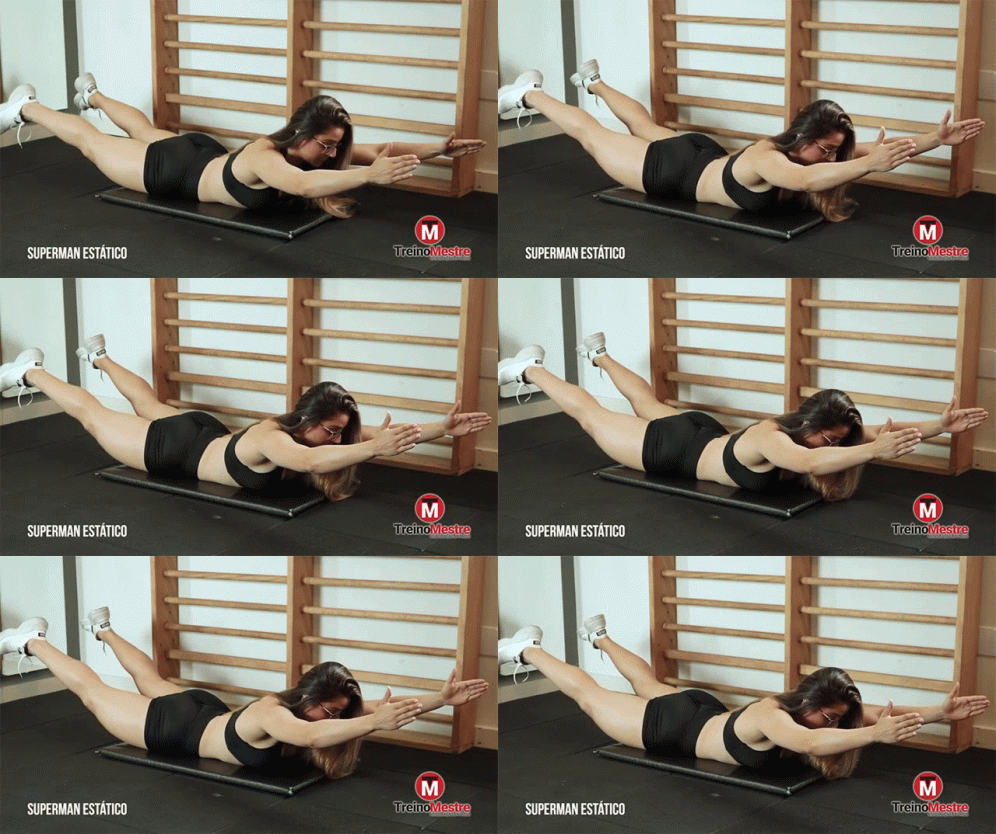
Superman — Optional add-on after daily routine. Tests glute firing order. 2 min.
Thread the Needle — Optional add-on after daily routine. Extra thoracic rotation. 2 min.
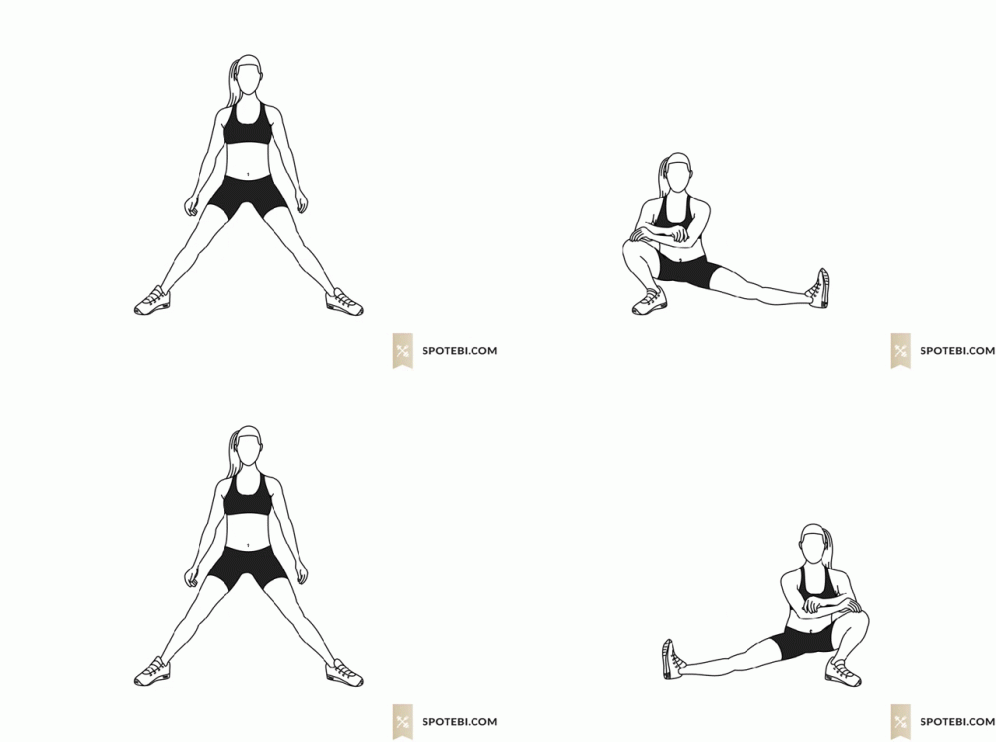
Turkish Get-Up, Cossack Squat — Mobility day only. These are complex loaded movements. Not daily.
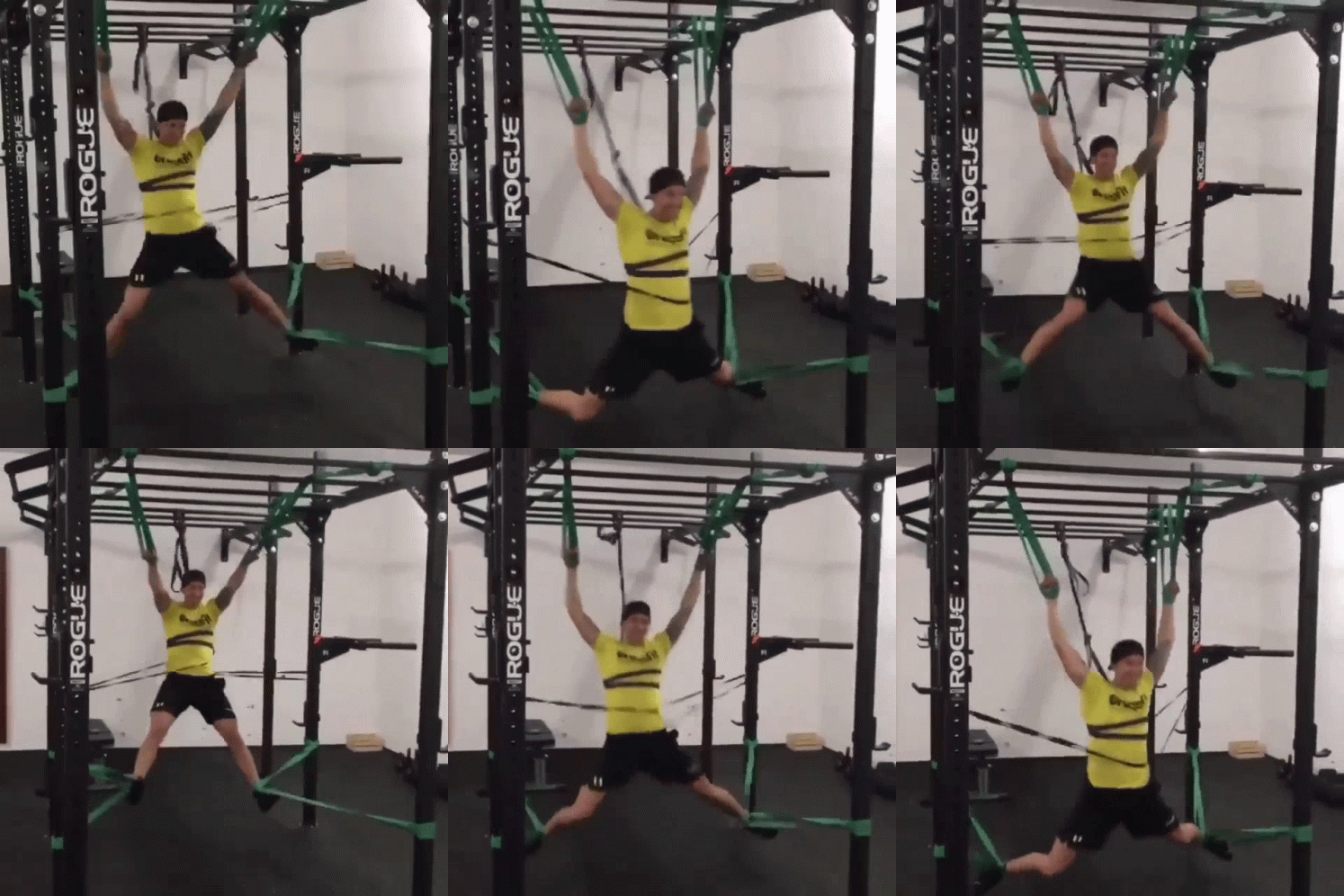
Dead Hang — Training days (when you have a pull-up bar). Grip + lat + shoulder work. Not daily corrective.
Prying Goblet Squat — Mobility day (already in add-ons above).
C1
World's Greatest Stretch
5 / side, hold 5s each position
Hits: thoracic rotation (A1), hip flexor lengthening (A2), ankle dorsiflexion (A4), hamstring. Full anterior/posterior chain integration in one flow. Can swap with Spider-Man lunge (#12) for variety — both hit 4 conditions, this one adds hamstring.
  1. From standing, step RIGHT foot forward into a deep lunge. Left knee can touch the ground. Right foot flat, knee tracking over 2nd-3rd toe.
  2. Place BOTH hands inside the right foot on the floor. Let hips sink down — squeeze the LEFT glute to increase the hip flexor stretch on that side (same cue as couch stretch).
  3. Rotation: Take your RIGHT hand, rotate and reach toward the ceiling. Follow with eyes. Exhale as you rotate — this drives the ribs down and allows more thoracic rotation. Hold 3-5s. Return hand to floor.
  4. Hamstring: Straighten the front (right) leg, hinge at the hips, reach for your right toes. Keep your back flat (don't round). Hold 3-5s. Re-bend the knee back to lunge.
  5. Step back to standing. Switch sides. 5 per side.
Key cue: "Lunge deep, squeeze back glute, rotate and exhale, straighten and reach." Four positions in one flow.
Should feel: Hip flexor stretch on back leg (same area as couch stretch — front of thigh and deep hip crease), thoracic rotation opening as you reach up, hamstring stretch when leg straightens, ankle dorsiflexion work on front leg.
Wrong if: Back knee pain (pad it or hover above ground). Lower back rotating instead of thoracic (keep hips square, rotate only from mid-back up). Rounding the back during hamstring portion (keep spine neutral, reduce range). Front knee caving inward (push it out — glute medius cue).
Common mistake: Rushing through as a cardio movement. This is SLOW mobility work — hold each position for 3-5 seconds. Also: not sinking the hips deep enough in the lunge (that's where the hip flexor stretch happens). And: looking at the floor during the rotation instead of following the hand to the ceiling.
Success feels like: The flow becomes smooth rather than stiff. Rotation range increases. You can sink deeper in the lunge. The hamstring portion becomes a comfortable stretch, not a fight. The whole thing feels like one connected movement, not 4 separate positions.
Watch Demo (Squat University)
C2
Turkish Get-Up (Light) MOBILITY DAY
2-3 / side
Hits 7+ conditions — the most of ANY exercise. Gold standard for spiral line rehabilitation. Thoracic rotation, glute firing in multiple positions, shoulder stability, hip IR through transitions, breathing under load, TFL multi-plane work.
  1. Start light (10-15 lb KB or DB, or even just a shoe balanced on your fist to learn). Learn the pattern before adding load.
  2. Setup: Lie on your back. KB in RIGHT hand, arm locked out toward ceiling (elbow fully extended, wrist straight, KB sitting on the base of your palm). Right knee bent, right foot flat on floor. Left leg straight, angled out ~45 degrees. Left arm out to the side ~45 degrees.
  3. Roll to elbow: Drive through your RIGHT foot and LEFT elbow simultaneously. Roll up onto your left elbow. Keep eyes on the KB. Engage your core — brace like someone's going to push you sideways. CHECKPOINT: pause here.
  4. Press to hand: Press up from left elbow to left hand. Your left arm is now straight, supporting you. CHECKPOINT.
  5. High bridge: Squeeze your RIGHT glute hard and drive hips up toward the ceiling. You're now in a bridge on your left hand and right foot. CHECKPOINT.
  6. Sweep the leg: Sweep your left leg back and under your body to a half-kneeling position (left knee under left hip). This is the most complex transition — go slow. Your hip goes through internal rotation here — this is why it's so valuable for hip IR.
  7. Upright: Take your left hand off the floor, come to an upright half-kneeling position. Eyes still on KB. Then stand up.
  8. REVERSE everything back down: lunge back → hand to floor → leg sweep forward → lower hips → elbow → flat. That's 1 rep.
  9. 2-3 per side. REST 30-60 seconds between each rep. Breathe at each checkpoint — don't hold your breath through the whole thing.
Key cue: "Eyes on the bell, arm locked out, SLOW. Each position is a checkpoint you could hold for 3 seconds." This is a SKILL exercise, not conditioning.
Should feel: Shoulder working hard to stabilize the weight overhead. Thoracic rotation during the roll-to-elbow. Glute firing during the bridge. Hip IR sensation as you sweep the leg. Core bracing throughout. It should feel like controlled, deliberate movement.
Wrong if: Arm bends at any point (weight is too heavy — go lighter). KB wobbling or feeling unstable (go lighter, slow down). Lower back pain during bridge (squeeze glute harder, don't hyperextend). Wrist pain under the KB (check alignment — KB should sit on the heel of your palm). Losing eye contact with the KB (until you're standing upright — then you can look forward).
Common mistake: Rushing. Each transition should be a distinct position. Also: using sit-up motion to get to elbow (it's a ROLL driven by the foot and elbow, not a crunch). Also: losing the arm lockout — if the arm bends, stop and go lighter. Also: holding breath through the whole rep — breathe at each checkpoint.
Success feels like: The movement becomes fluid but controlled. Each checkpoint feels stable and you could pause there indefinitely. You can increase weight gradually (5 lb jumps). Over time, this single exercise improves everything — it's a full-body diagnostic disguised as an exercise. If a position suddenly feels hard that used to be easy, something regressed.
Watch Demo (Basics) Alt: Detailed Breakdown
C3
Superman (Corrected Form)
3 x 10s hold
Tests glute-first firing order + thoracic extension integration. Assessment showed: lower back tightens immediately, glutes don't fire for 15-20 seconds. This drills the CORRECT firing sequence.
  1. Lie face down. Arms at sides (easier) or extended overhead (harder). Start with arms at sides.
  2. SQUEEZE GLUTES FIRST. Before lifting anything, activate the glutes — same "crack a walnut" cue as bridges. Hold that squeeze.
  3. Lightly brace abs — same cue as thoracic roller. This prevents your lumbar from hyperextending.
  4. THEN, while maintaining glute squeeze and ab brace, lift chest and legs off the ground simultaneously. The lift should come from your GLUTES and UPPER BACK, not your lower back.
  5. Hold 10 seconds. Check every 3 seconds: Am I feeling GLUTES or has my lower back taken over? If lower back, lower slightly and re-squeeze glutes.
  6. Lower fully. Rest 10 seconds. Repeat 3 times.
Key cue: "Glutes FIRST, abs braced, THEN lift. Low is fine — pattern matters, not height."
Should feel: Glutes as the PRIMARY driver (not hamstrings, not lower back). Upper back muscles working to lift your chest. A deep "squeezing" in your butt that's hard to sustain for 10 seconds.
Wrong if: Lower back tightening immediately (you lost the glute squeeze or abs — reset). Can't feel glutes at all (try squeezing harder BEFORE lifting, reduce height). Neck straining (look at the floor, don't crane your head up). Hamstrings cramping (may need to do couch stretch first to release hip flexors — reciprocal inhibition helps glutes fire).
Common mistake: Trying to get high off the ground. A low superman with correct glute activation is infinitely better than a high one driven by lumbar erectors. Also: not squeezing glutes BEFORE lifting — the sequencing IS the exercise. If you lift first and then try to squeeze, your lower back has already taken over.
Success feels like: You can maintain glute activation for the full 10 seconds without it migrating to lower back. The "lower back tightens immediately" pattern from your assessment resolves. Over weeks, glutes fire first automatically.
Watch Demo (Fix Your Form)
Superman demonstration
C4
Dead Hang (Full-Grip Conscious)
3 x max hold, focus on form
Hits: grip pattern retraining (A10), lat length (A5), shoulder stability (A12). Your assessment showed thumb and pinky disengaged — hanging from middle 3 fingers. This retrains full-hand engagement.
  1. Stand under the bar. Before gripping: shake out your hands, spread all fingers wide for 3 seconds (this "resets" the grip pattern).
  2. Grip the bar with INTENT. Consciously wrap your THUMB fully around the bar (not a false/thumbless grip). Press your PINKY firmly into the bar.
  3. Check before you hang: Can you feel all 5 fingers? Thumb should be opposite the fingers, pinky pressing. If your thumb is barely touching, readjust.
  4. Now hang with full arm extension. Let your shoulders come UP to your ears — this is a PASSIVE hang. Don't pull your shoulders down. The goal is lat and shoulder decompression, not a scapular pull-up.
  5. Hold as long as you can with ALL 5 fingers engaged. Every 10 seconds, consciously check: Is my thumb still wrapped? Is my pinky still pressing? The moment either releases, the set is OVER (even if you could keep hanging on 3 fingers for another minute).
  6. 3 sets. Rest 60s between. Pattern quality over duration. Your "full-grip time" is the metric, not total hang time.
Key cue: "All 5 fingers, thumb and pinky especially. Set ends when grip PATTERN breaks, not when strength fails."
Should feel: All fingers working equally — this will feel unfamiliar. Forearms working differently than usual — broader engagement, especially the outer edge (pinky side) and thumb base. Lats stretching (armpit area). Shoulders decompressing (space between shoulder and ear increases).
Wrong if: Only feeling it in middle 3 fingers (old pattern — consciously re-engage thumb and pinky). Pulling shoulders down (that's an active hang — let them relax up for passive stretching). Swinging (stay still — momentum masks grip quality). Wrist pain (check bar diameter — thicker bars are easier on wrists).
Common mistake: Defaulting to 3-finger grip out of habit — your brain has 20 years of this pattern. The conscious check every 10 seconds is not optional during the learning phase. Also: measuring success by total hang time. Your metric is "time with all 5 fingers" not "time on the bar."
Success feels like: Full-hand grip duration matches your old 3-finger duration (6-8 weeks). Thumb stays engaged without conscious reminding. Pinky-side forearm develops visible definition. Finger cramping after grip work decreases.
Watch Demo (If You Do It Right)
Dead hang demonstration
C5
Cossack Squat MOBILITY DAY
5-8 / side
Hits: hip IR under load (A9), ankle dorsiflexion (A4), adductors, lateral stability. Loaded hip IR + adductor stretch in a functional squat pattern. Excellent for hip capsule mobilization.
  1. Stand with feet wider than shoulder-width (~1.5x shoulder width). Toes slightly turned out (~30 degrees).
  2. Hold a light weight (10-20 lb DB or KB) at chest (goblet position) for counterbalance — this makes it EASIER, not harder.
  3. Shift your weight to the RIGHT leg. Engage your core (light ab brace) to keep torso upright. Squat down on the right leg — go as deep as possible while keeping RIGHT HEEL FLAT.
  4. The LEFT leg stays straight. Let the left foot rotate so toes point up (heel stays on ground). You should feel a strong adductor (inner thigh) stretch on the straight leg.
  5. At the bottom: Push the right knee OUT with your elbow (like prying goblet squat). This creates hip IR load. Keep chest tall — squeeze shoulder blades together slightly to prevent rounding forward.
  6. Drive back up through the right heel. Squeeze the right glute as you stand up. Switch sides. 5-8 per side.
  7. Option: Hold the bottom position for 3-5 seconds per rep for more mobility work. Or flow side to side without standing up for a dynamic version.
Key cue: "Deep on one side, straight on the other, heel flat, chest up, knee pushed out."
Should feel: Deep hip stretch on the working (squat) leg, strong adductor stretch on the straight leg (inner thigh near groin), ankle dorsiflexion demand on the squat side, and a lateral stability challenge. The weight at chest should make balance EASIER.
Wrong if: Squat-side heel lifting (reduce depth — only go as deep as you can with heel flat. Ankle blocks under heels are OK temporarily). Torso falling forward (hold weight closer to chest, squeeze shoulder blades, brace core). Straight-leg knee bending (reduce depth on squat side). Knee caving inward on squat side (push it out with elbow or consciously drive it over 2nd toe).
Common mistake: Going too wide or too narrow on stance. Too wide = can't get deep enough. Too narrow = can't straighten the other leg. Also: rounding forward at the bottom — this is a mobility exercise, not a weighted squat. Chest stays tall even if depth is limited. And: using ankle blocks as a permanent crutch — they're a temporary aid while ankle mobility improves.
Success feels like: You can get deeper into the squat side each week while maintaining heel contact and upright torso. The adductor stretch on the straight leg becomes comfortable. This is one of the best overall indicators of lower body mobility — if Cossack squats are improving, everything is improving.
Watch Demo (Tutorial + Progressions)
Cossack squat demonstration
C6
Thread the Needle
8 / side
Isolated thoracic rotation. Rotation-extension coupling means rotation work helps UNLOCK extension (your #1 root cause). More targeted than Spider-Man lunge for pure thoracic rotation.
  1. Start on hands and knees (quadruped). Hands directly under shoulders, knees directly under hips. Lightly brace abs to prevent your lower back from sagging or rotating.
  2. Place your RIGHT hand behind your head (elbow pointing out to the side).
  3. Thread under: Rotate your upper body to the LEFT, "threading" your right elbow under your left arm toward the floor. Let your right shoulder and temple lower toward the floor. Go as far as you can. Hold 3-5 seconds.
  4. Open up: Now REVERSE — rotate your upper body to the RIGHT, driving your right elbow toward the ceiling. Follow your elbow with your eyes — eye tracking drives spinal rotation. Exhale as you rotate open — this helps your ribs move. Open your chest to the right as much as possible. Hold 3-5 seconds.
  5. That's 1 rep (under + open = 1). 8 per side.
  6. Keep your hips STILL throughout. Only your upper body should rotate. If your hips are swaying, you're rotating from the lumbar spine (wrong) instead of the thoracic (right). Your abs brace prevents this.
Key cue: "Thread under, open to ceiling, eyes follow the elbow. Hips don't move — rotation is thoracic ONLY."
Should feel: Rotational stretch in mid-back (between shoulder blades). On the open-up portion: chest opens, you feel the front of your shoulder stretching, and a satisfying rotational release. Lower back should stay quiet and stable.
Wrong if: Hips swaying side to side (you're rotating from the lumbar — brace abs harder, reduce range). Pain in shoulder on the open-up (reduce range or skip the hand-behind-head variant and just reach with a straight arm). No rotation at all (your thoracic is very locked — this is exactly why you need this exercise, keep going with small range).
Common mistake: Moving the hips. The hips are a FIXED POINT — all rotation happens above. Also: not following with the eyes (eye tracking adds 10-15% to rotation range for free). Also: rushing — hold each end position for 3-5 full seconds. The stretch happens in the HOLD, not the motion.
Success feels like: Rotation range increases week over week. You can see further behind you on the open-up. May hear/feel thoracic pops (normal — same as roller extensions, gas release from facet joints). The mid-back feels "looser" and more mobile after a set.
Watch Demo (Quadruped) Alt: Thread the Needle Stretch

Optional Add-Ons Any Time

These can be done after the daily routine, as standalone micro-doses, or before bed. They complement the daily 13 but aren't mandatory.
+
Lat Doorframe Stretch
1 min / side
Your lats are pulling your lumbar into extension (assessment: lower back peels off floor during overhead reach, arms only ~160-165 degrees instead of 180). Lats connect from your arm through your lower back — tight lats = can't get arms overhead without arching. Blocks handstands (banana-arch) and overhead pressing. Great pre-bed exercise (gentle, parasympathetic).
  1. Stand in a doorframe. Reach your RIGHT arm up and grab the top of the doorframe (or the side at shoulder height+ if you can't reach the top).
  2. Step your RIGHT foot forward slightly through the doorframe. This offsets your body.
  3. Now lean your body AWAY from the right arm — shift your hips to the LEFT. Your right arm stays holding the doorframe while your body moves away from it.
  4. You should feel a stretch along the RIGHT side of your torso, from your armpit down through the side of your ribcage and into your lower back. That's the lat.
  5. To deepen: Rotate your chest slightly AWAY from the arm (left). This adds a thoracic rotation component. Breathe into the stretched side — this expands the ribs on the stretched side, adding fascial lengthening.
  6. Hold 60 seconds per side. No PNF needed — this is a sustained passive hold. Let gravity do the work.
Key cue: "Grab high, lean away, breathe into the stretched side." The lean creates the stretch; the breathing deepens it.
Should feel: A long stretch from your armpit down through the side of your torso to your lower back. It's not just a shoulder stretch — you should feel it along the entire side. With the rotation and breathing, it extends into the ribcage.
Wrong if: Only feeling it in the shoulder (lean MORE with your hips, not just your upper body). Elbow bending (keep arm straight — you want the full lat on stretch). Lower back arching (you're extending instead of side-bending — tuck tailbone slightly). Pain in shoulder joint (lower your hand position on the doorframe).
Common mistake: Just hanging from the doorframe without actually leaning the hips away. The HIP SHIFT is what creates the lat stretch — the arm hold is just an anchor. Also: holding breath. The breathing-into-the-stretched-side technique actively lengthens the fascial tissue between the ribs.
Success feels like: Over weeks, overhead reach improves (arms get closer to ears without lower back arching). The supine overhead reach test (arms toward floor behind you) shows less gap. Handstand line improves. The stretch becomes a "release" rather than a "fight."
Watch Demo (Assessment + Stretch)

Optional: Direct Lumbar Relief ~5 min

Why optional: Your lower back is overworking because thoracic is locked + APT pulls pelvis into lordosis + glutes aren't sharing the load. The daily routine fixes the CAUSES. But if your lower back is screaming, these provide direct relief while the root causes resolve. Also good for days when you've been sitting for hours.
18
Child's Pose with Lat Bias OPTIONAL
60-90s
Gently lengthens the lumbar erectors that are chronically shortened from overwork. The lat bias (arms reaching forward and slightly to one side) also hits the lats that are pulling your lumbar into extension.
  1. Kneel on the floor. Sit your hips back toward your heels.
  2. Walk your hands forward on the floor, letting your chest sink toward the ground. Arms extended.
  3. Let your forehead rest on the floor. Breathe deeply — belly into thighs.
  4. Lat bias: Walk both hands to the RIGHT. You'll feel a deeper stretch along the LEFT side of your lower back and lats. Hold 30s. Then walk hands to the LEFT for the right side. 30s.
  5. Return to center for a final 30s hold.
Key cue: "Hips to heels, breathe into the lower back, hands walk to the side for lat stretch."
Should feel: Gentle lengthening across the lower back. With the lat bias, a stretch along the side of your back from armpit to hip.
Wrong if: Knee pain (place a pillow between calves and thighs). Can't sit on heels (go as far back as comfortable — the stretch still works).
Common mistake: Rounding aggressively to "feel the stretch." This is gentle — let gravity do the work. Also: holding breath. The diaphragmatic breathing INTO your lower back is half the benefit.
Success feels like: Immediate relief from lower back tension. Your lumbar area feels "longer" and less compressed afterward. As thoracic and APT improve from the daily routine, you'll need this less often.
Child's pose demonstration
19
Supine Lumbar Rotation OPTIONAL
30s / side
Gentle rotational mobilization for the lumbar segments. Your thoracic spine has reasonable rotation (assessment: 50 degrees, bilateral) but your lumbar erectors are locked in extension. This introduces gentle rotation to break up the lockdown pattern. Also reduces compression on facet joints.
  1. Lie on your back. Knees bent, feet flat on floor.
  2. Arms out to the sides in a T-position, palms down.
  3. Keeping both shoulders flat on the floor, slowly let both knees fall to the RIGHT. Go as far as comfortable.
  4. Hold 30 seconds. Breathe. On each exhale, let the knees sink slightly further (don't force).
  5. Return to center. Let knees fall to the LEFT. Hold 30 seconds.
Key cue: "Shoulders stay flat, knees fall to the side, breathe and let gravity pull them down."
Should feel: Gentle stretch through the lower back on the opposite side of where the knees fall. May feel a stretch into the hip/oblique area too.
Wrong if: Shoulders lifting off floor (reduce the range — don't let knees go as far). Sharp or nerve-like pain (stop — this shouldn't be painful at all).
Common mistake: Forcing the knees all the way to the floor. The goal is gentle rotation, not maximum range. Your shoulders should stay flat — if they're lifting, the knees are going too far.
Success feels like: The lower back feels "looser" and less compressed. You may hear or feel gentle pops/clicks (normal — gas release from facet joints). Great for desk breaks or before bed.
20
Foam Roll Lumbar Erectors OPTIONAL
60s (GENTLE)
Neural tone reduction for overworked lumbar erectors. These muscles are chronically fired because they're doing the job of your locked thoracic spine and inhibited glutes. This calms them down temporarily.
  1. Lie on your back. Place the foam roller under your lower back, perpendicular to your spine.
  2. IMPORTANT: Roll the MUSCLES on either SIDE of the spine, NOT directly on the spine itself. The lumbar spine has no rib cage to protect it — never put direct pressure on the vertebrae.
  3. Angle your body slightly to one side so the roller contacts the erector muscles (the "rope-like" muscles running alongside the spine).
  4. Slowly roll up and down a short range (2-3 inches). Pause on tender spots for 5-10 seconds.
  5. Switch to the other side. 30 seconds per side.
  6. GENTLE PRESSURE ONLY. This is neural tone reduction (calming), not deep tissue work.
Key cue: "Side of spine, NOT on spine. Gentle. Pause on tender spots."
Should feel: Moderate tenderness in the erector muscles alongside the spine. A "releasing" sensation as the muscles soften under pressure.
Wrong if: Pain directly on the spine (you're on vertebrae — shift to the side). Sharp or shooting pain (stop). Numbness or tingling into legs (stop — nerve issue, avoid that area).
Common mistake: Rolling directly on the spinal column. The lumbar vertebrae have NO rib cage protection — direct pressure can be harmful. Stay on the MUSCLES, not the BONES. Also: using too much pressure. This should feel relieving, not agonizing.
Success feels like: Immediate tension relief. Lower back feels less "wound up." As the root causes (thoracic lockdown, APT, glute deficit) resolve through the daily routine, you'll need this less and less.

How to Know It's Working

Week 1-3 (Neural): Fastest changes. Stretches feel easier (tolerance, not structure). Foam roller feels slightly less like a hard tube. Glute bridges feel more "in the glutes." Headache frequency may decrease.

Week 4-8 (Early Structural): Measurable ROM changes. Ankle wall test improves ~0.5-1 inch. Couch stretch: more upright. Thoracic roller: individual segments start to differentiate. Glute activation semi-automatic.

Week 9-16 (Structural Remodeling): Sarcomere addition from eccentric loading. Genuine tissue lengthening. Squat pattern improves. Forward lean decreases. Headaches rare.

Quick daily check: Does the foam roller feel slightly less rigid than yesterday? Can you sink slightly deeper in the couch stretch? Do the glute bridges feel more glute-dominant? These are session-to-session micro-wins.
Formal Retest Schedule:
2 weeks (~Apr 19): Ankle wall test (cold), couch stretch depth, glute bridge migration timing
4 weeks (~May 3): Full lower body + thoracic roller test
8 weeks (~Jun 1): Full 17-test reassessment

Red flag: If NO improvement in 2-3 weeks on any area, the restriction type may be misidentified (e.g., capsular not muscular). That's when we reassess approach for that specific area.

More Pages

Mobility Day
Extended holds, loaded approaches, assessment checkpoints
Training Day
Add-ons by split: chest, back, arms, legs
Mini-Sessions
Thoracic, hip, ankle, headache (8-12 min)
Desk Breaks
Micro-doses at work + pre-bed routine
Now go to:
Lower Body Upper Body Skill Session Back to Hub
0 / 13